Page 21 - Learnwell EVS
P. 21
p://JUDIS.NIC.IN SUPREME COURT OF INDIA Page 20 of 25
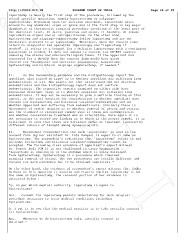
laparotomy is merely the first step of the procedure, followed by the
actual specific operation, namely hysterectomy or salpingo-
oopherectomy. Depending upon the incision placement, laparotomy gives
access to any abdominal organ or space and is the first step in any major
diagnostic or therapeutic surgical procedure involving a) the lower port of
the digestive tract, b) liver, pancreas and spine, c) bladder, d) female
reproductive organs and e) retroperitonium. On the other hand,
hysterectomy and slapingo-oopherectomy follow laparotomy and are not
themselves referred to as laparotomy. Therefore, when the consent form
refers to diagnostic and operative laparoscopy and "laparotomy if
needed", it refers to a consent for a definite laparoscopy with a contingent
laparotomy if needed. It does not amount to consent for OH-BSO surgery
removing the uterus and ovaries/fallopian tubes. If the appellant had
consented for a OH-BSO then the consent form would have given
consent for "diagnostic and operative laparoscopy. Laparotomy,
hysterectomy and bilateral salpingo-oopherectomy, if needed."
41. On the documentary evidence and the histopathology report the
appellant also raised an issue as to whether appellant was suffering from
endometriosis at all. She points out that ultra-sound did not disclose
endometriosis and the histopathology report does not confirm
endometriosis. The respective experts examined on either side have
expressed divergent views as to whether appellant was suffering from
endometriosis. It may not be necessary to give a definite finding on this
aspect, as the real question for consideration is whether appellant gave
consent for hysterectomy and bilateral salpingo-oopherectomy and not
whether appellant was suffering from endometriosis. Similarly there is
divergence of expert opinion as to whether removal of uterus and ovaries
was the standard or recognized remedy even if there was endometriosis
and whether conservative treatment was an alternative. Here again it is
not necessary to record any finding as to which is the proper remedy. It is
sufficient to note that there are different modes of treatment favoured by
different schools of thought among Gynaecologists.
42. Respondent contended that the term ’laparotomy’ is used in the
consent form (by her assistant Dr. Lata Rangan) is equal to or same as
hysterectomy. The respondent’s contention that ’Laparotomy’ refers to and
includes hystectomy and bilateral salpingo-oopherectomy cannot be
accepted. The following clear evidence of appellant’s expert witness --
Dr. Puneet Bedi (CW 1) is not challenged in cross examination :
"Laparotomy is opening up of the abdomen which is quite different
from hysterectomy. Hysterectomy is a procedure which involves
surgical removal of uterus. The two procedures are totally different and
consent for each procedure has to be obtained separately."
On the other hand, the evidence of respondent’s expert witness (Dr. Sudha
Salhan) on this question is evasive and clearly implies laparotomy is not
the same as hysterectomy. The relevant portion of her evidence is
extracted below :
"Q. As per which medical authority, laparotomy is equal to
hysterectomy?
Ans. Consent for laparotomy permits undertaking for such surgical
procedure necessary to treat medical conditions including
hysterectomy.
Q. I put it to you that the medical practice is to take specific consent
for hysterectomy.
Ans. Whenever we do hysterectomy only, specific consent is
obtained."
laparotomy is merely the first step of the procedure, followed by the
actual specific operation, namely hysterectomy or salpingo-
oopherectomy. Depending upon the incision placement, laparotomy gives
access to any abdominal organ or space and is the first step in any major
diagnostic or therapeutic surgical procedure involving a) the lower port of
the digestive tract, b) liver, pancreas and spine, c) bladder, d) female
reproductive organs and e) retroperitonium. On the other hand,
hysterectomy and slapingo-oopherectomy follow laparotomy and are not
themselves referred to as laparotomy. Therefore, when the consent form
refers to diagnostic and operative laparoscopy and "laparotomy if
needed", it refers to a consent for a definite laparoscopy with a contingent
laparotomy if needed. It does not amount to consent for OH-BSO surgery
removing the uterus and ovaries/fallopian tubes. If the appellant had
consented for a OH-BSO then the consent form would have given
consent for "diagnostic and operative laparoscopy. Laparotomy,
hysterectomy and bilateral salpingo-oopherectomy, if needed."
41. On the documentary evidence and the histopathology report the
appellant also raised an issue as to whether appellant was suffering from
endometriosis at all. She points out that ultra-sound did not disclose
endometriosis and the histopathology report does not confirm
endometriosis. The respective experts examined on either side have
expressed divergent views as to whether appellant was suffering from
endometriosis. It may not be necessary to give a definite finding on this
aspect, as the real question for consideration is whether appellant gave
consent for hysterectomy and bilateral salpingo-oopherectomy and not
whether appellant was suffering from endometriosis. Similarly there is
divergence of expert opinion as to whether removal of uterus and ovaries
was the standard or recognized remedy even if there was endometriosis
and whether conservative treatment was an alternative. Here again it is
not necessary to record any finding as to which is the proper remedy. It is
sufficient to note that there are different modes of treatment favoured by
different schools of thought among Gynaecologists.
42. Respondent contended that the term ’laparotomy’ is used in the
consent form (by her assistant Dr. Lata Rangan) is equal to or same as
hysterectomy. The respondent’s contention that ’Laparotomy’ refers to and
includes hystectomy and bilateral salpingo-oopherectomy cannot be
accepted. The following clear evidence of appellant’s expert witness --
Dr. Puneet Bedi (CW 1) is not challenged in cross examination :
"Laparotomy is opening up of the abdomen which is quite different
from hysterectomy. Hysterectomy is a procedure which involves
surgical removal of uterus. The two procedures are totally different and
consent for each procedure has to be obtained separately."
On the other hand, the evidence of respondent’s expert witness (Dr. Sudha
Salhan) on this question is evasive and clearly implies laparotomy is not
the same as hysterectomy. The relevant portion of her evidence is
extracted below :
"Q. As per which medical authority, laparotomy is equal to
hysterectomy?
Ans. Consent for laparotomy permits undertaking for such surgical
procedure necessary to treat medical conditions including
hysterectomy.
Q. I put it to you that the medical practice is to take specific consent
for hysterectomy.
Ans. Whenever we do hysterectomy only, specific consent is
obtained."