Page 17 - Learnwell EVS
P. 17
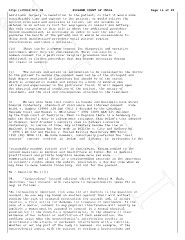
p://JUDIS.NIC.IN SUPREME COURT OF INDIA Page 16 of 25
additional surgery is beneficial to the patient, or that it would save
considerable time and expense to the patient, or would relieve the
patient from pain and suffering in future, are not grounds of
defence in an action in tort for negligence or assault and battery.
The only exception to this rule is where the additional procedure
though unauthorized, is necessary in order to save the life or
preserve the health of the patient and it would be unreasonable to
delay such unauthorized procedure until patient regains
consciousness and takes a decision.
(iv) There can be a common consent for diagnostic and operative
procedures where they are contemplated. There can also be a
common consent for a particular surgical procedure and an
additional or further procedure that may become necessary during
the course of surgery.
(v) The nature and extent of information to be furnished by the doctor
to the patient to secure the consent need not be of the stringent and
high degree mentioned in Canterbury but should be of the extent
which is accepted as normal and proper by a body of medical men
skilled and experienced in the particular field. It will depend upon
the physical and mental condition of the patient, the nature of
treatment, and the risk and consequences attached to the treatment.
33. We may note here that courts in Canada and Australia have moved
towards Canterbury standard of disclosure and informed consent - vide
Reibl v. Hughes (1980) 114 DLR (3d.) 1 decided by the Canadian
Supreme Court and Rogers v. Whittaker - 1992 (109) ALR 625 decided
by the High Court of Australia. Even in England there is a tendency to
make the doctor’s duty to inform more stringent than Bolam’s test adopted
in Sidaway. Lord Scarman’s minority view in Sidaway favouring
Canterbury, in course of time, may ultimately become the law in
England. A beginning has been made in Bolitho v. City and Hackney HA
- 1998 1 AC 232 and Pearce v. United Bristol Healthcare NHS Trust
1998 (48) BMLR 118. We have however, consciously preferred the ’real
consent’ concept evolved in Bolam and Sidaway in preference to the
’reasonably prudent patient test’ in Canterbury, having regard to the
ground realities in medical and health-care in India. But if medical
practitioners and private hospitals become more and more
commercialized, and if there is a corresponding increase in the awareness
of patient’s rights among the public, inevitably, a day may come when we
may have to move towards Canterbury. But not for the present.
Re : Question No.(iii)
34. ’Gynaecology’ (second edition) edited by Robert W. Shah,
describes ’real consent’ with reference to Gynaecologists (page 867 et
seq) as follows :
"An increasingly important risk area for all doctors is the question of
consent. No-one may lay hands on another against their will without
running the risk of criminal prosecution for assault and, if injury
results, a civil action for damages for trespass or negligence. In the
case of a doctor, consent to any physical interference will readily be
implied; a woman must be assumed to consent to a normal physical
examination if she consults a gynaecologist, in the absence of clear
evidence of her refusal or restriction of such examination. The
problems arise when the gynaecologist’s intervention results in
unfortunate side effects or permanent interference with a function,
whether or not any part of the body is removed. For example, if the
gynaecologist agrees with the patient to perform a hysterectomy and
additional surgery is beneficial to the patient, or that it would save
considerable time and expense to the patient, or would relieve the
patient from pain and suffering in future, are not grounds of
defence in an action in tort for negligence or assault and battery.
The only exception to this rule is where the additional procedure
though unauthorized, is necessary in order to save the life or
preserve the health of the patient and it would be unreasonable to
delay such unauthorized procedure until patient regains
consciousness and takes a decision.
(iv) There can be a common consent for diagnostic and operative
procedures where they are contemplated. There can also be a
common consent for a particular surgical procedure and an
additional or further procedure that may become necessary during
the course of surgery.
(v) The nature and extent of information to be furnished by the doctor
to the patient to secure the consent need not be of the stringent and
high degree mentioned in Canterbury but should be of the extent
which is accepted as normal and proper by a body of medical men
skilled and experienced in the particular field. It will depend upon
the physical and mental condition of the patient, the nature of
treatment, and the risk and consequences attached to the treatment.
33. We may note here that courts in Canada and Australia have moved
towards Canterbury standard of disclosure and informed consent - vide
Reibl v. Hughes (1980) 114 DLR (3d.) 1 decided by the Canadian
Supreme Court and Rogers v. Whittaker - 1992 (109) ALR 625 decided
by the High Court of Australia. Even in England there is a tendency to
make the doctor’s duty to inform more stringent than Bolam’s test adopted
in Sidaway. Lord Scarman’s minority view in Sidaway favouring
Canterbury, in course of time, may ultimately become the law in
England. A beginning has been made in Bolitho v. City and Hackney HA
- 1998 1 AC 232 and Pearce v. United Bristol Healthcare NHS Trust
1998 (48) BMLR 118. We have however, consciously preferred the ’real
consent’ concept evolved in Bolam and Sidaway in preference to the
’reasonably prudent patient test’ in Canterbury, having regard to the
ground realities in medical and health-care in India. But if medical
practitioners and private hospitals become more and more
commercialized, and if there is a corresponding increase in the awareness
of patient’s rights among the public, inevitably, a day may come when we
may have to move towards Canterbury. But not for the present.
Re : Question No.(iii)
34. ’Gynaecology’ (second edition) edited by Robert W. Shah,
describes ’real consent’ with reference to Gynaecologists (page 867 et
seq) as follows :
"An increasingly important risk area for all doctors is the question of
consent. No-one may lay hands on another against their will without
running the risk of criminal prosecution for assault and, if injury
results, a civil action for damages for trespass or negligence. In the
case of a doctor, consent to any physical interference will readily be
implied; a woman must be assumed to consent to a normal physical
examination if she consults a gynaecologist, in the absence of clear
evidence of her refusal or restriction of such examination. The
problems arise when the gynaecologist’s intervention results in
unfortunate side effects or permanent interference with a function,
whether or not any part of the body is removed. For example, if the
gynaecologist agrees with the patient to perform a hysterectomy and